How to show up on Google (no jargon)
· 4 min read
When someone searches "plumbers near me" or "best tacos in Colorado Springs," Google decides who to show first. Local SEO is how you become one of the businesses it picks.
You are actually trying to win in 3 different spots:
1. The map at the top with 3 business listings under it.
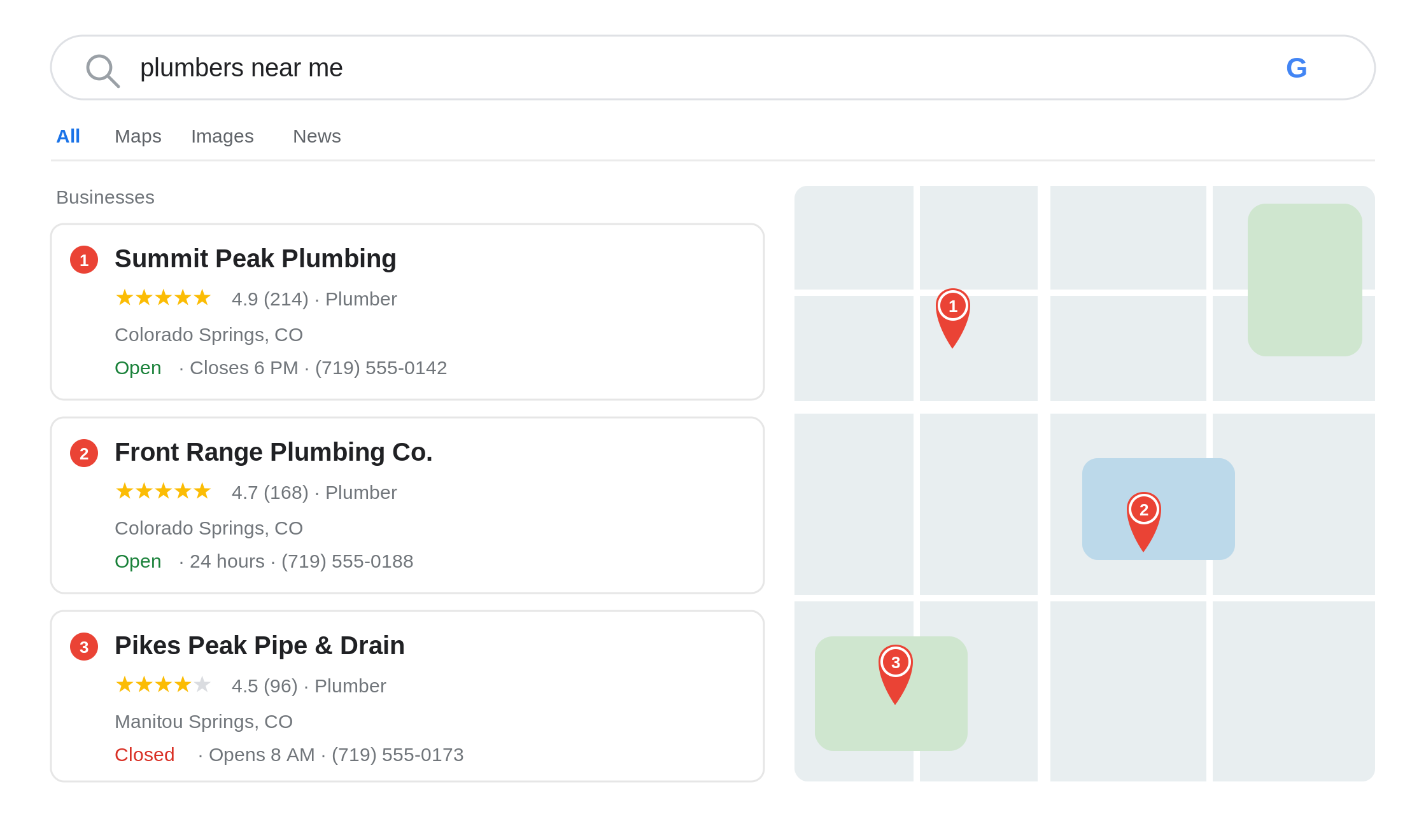
This one gets the most clicks.
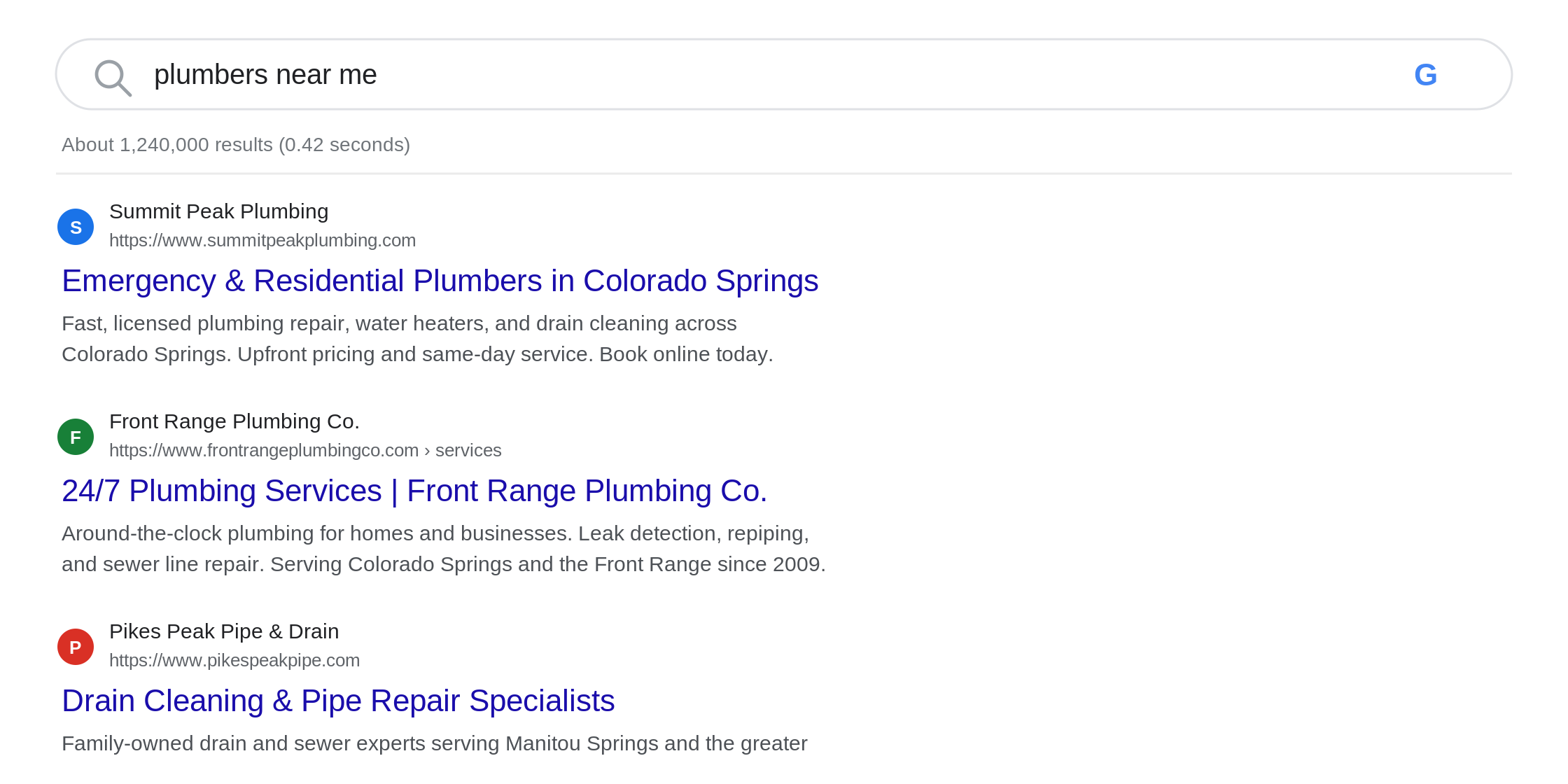
Normal website results below the map.
3. Other sites that list businesses.
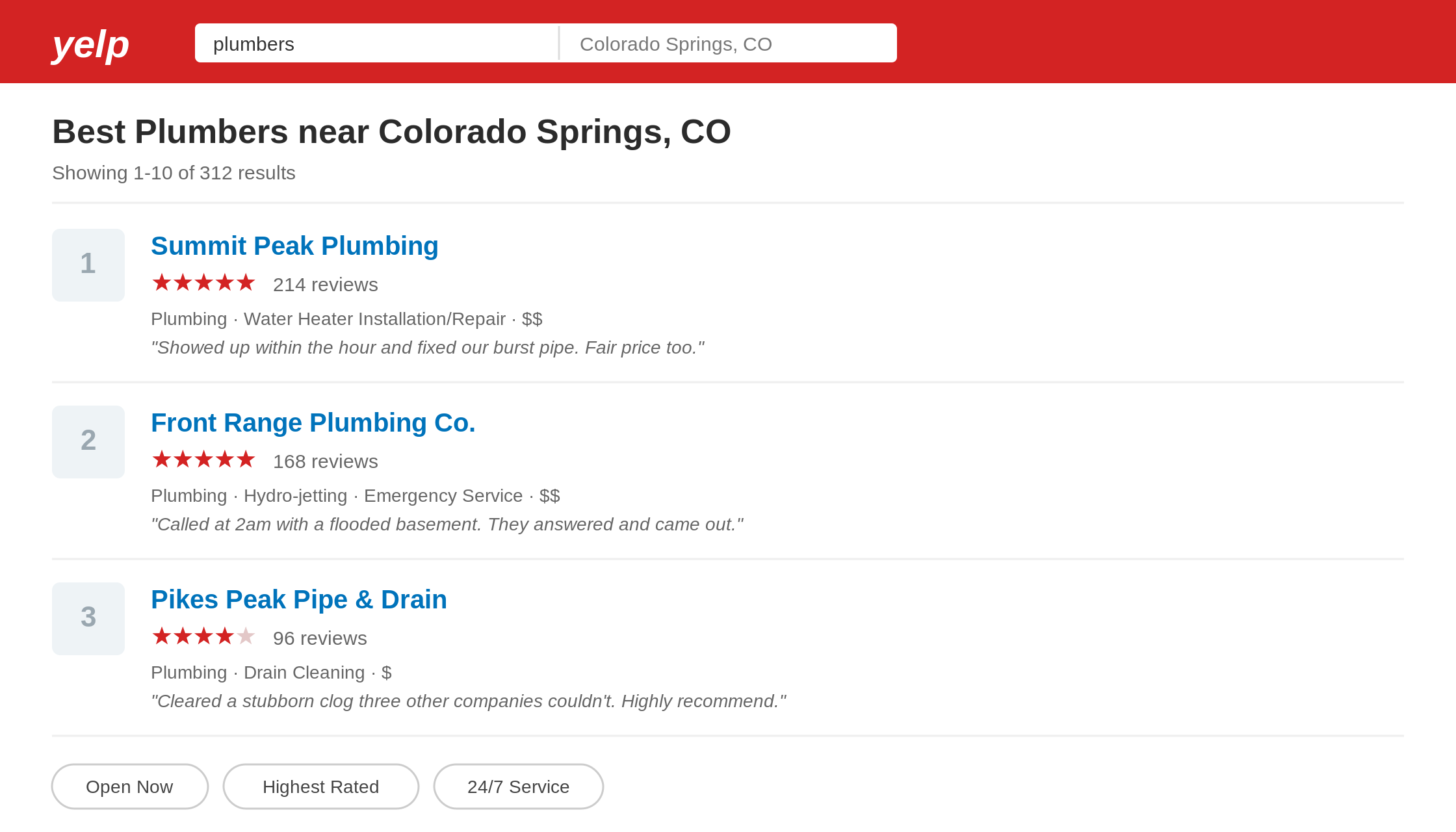
Yelp, Google itself, and sometimes industry directories
1. Google Business Profile, your way into the map
The map listings don't come from your website. They come from a separate, free thing called your Google Business Profile (formerly Google My Business).
This is basically your business's profile page that lives inside Google Search and Google Maps. Without one, you can't appear on that map, no matter how good your website is.
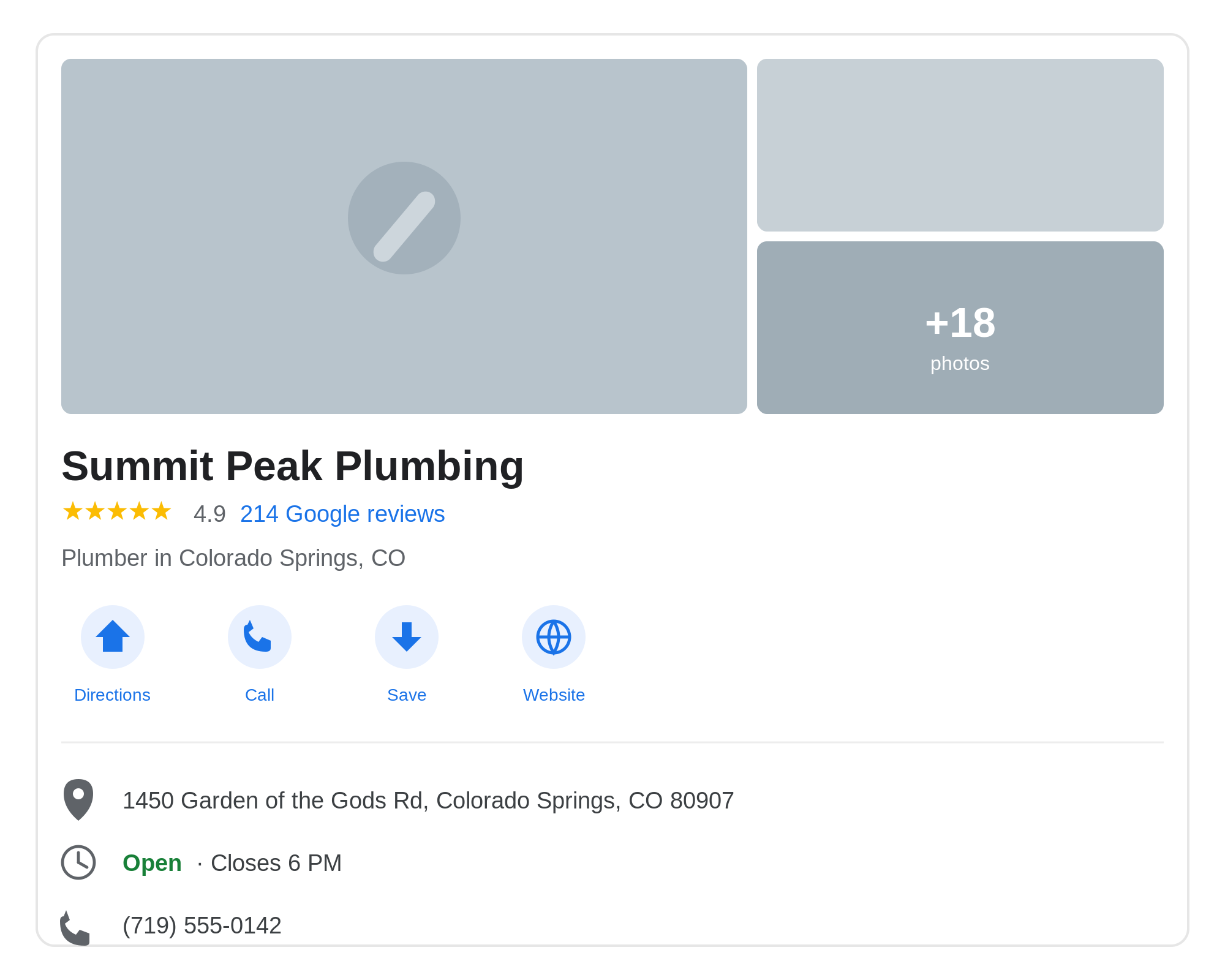
What to do:
- Claim it. Go to google.com/business and create or claim your listing. Google will verify that you actually run the business.
- Fill out everything. Hours, phone, website, services, photos, etc.
- Pick the right categories. Be specific and accurate. "Emergency plumber" instead of just "Plumber" will help Google know more about you.
- Add real photos of your work, storefront, products, team. Google prefers profiles that look active and real.
- Post updates. You can post promotions, events, and photos like a mini social feed. This signals to Google that business is running.
The most important thing here is reviews. This is the main way Google decides who is trustworthy and worth showing. There are 3 things that matter:
- Quantity. You want more reviews than your competitors.
- Quality. You want mostly positive and recent reviews. A steady trickle will beat 20 reviews from 3 years ago.
- Responses. Reply to reviews, whether good or bad. This shows you care and are paying attention.
The most reliable way to get reviews is to ask happy customers right after you've done good work. Give them a direct link that takes them straight to the review screen. (Our guide on how to get more reviews covers this in depth, including what to do about bad ones.)
2. Your website, for the regular results
Your website matters for two reasons. It's how you rank in the normal blue links, and a good website helps your Google Business Profile build credibility. They back each other up.
What to do:
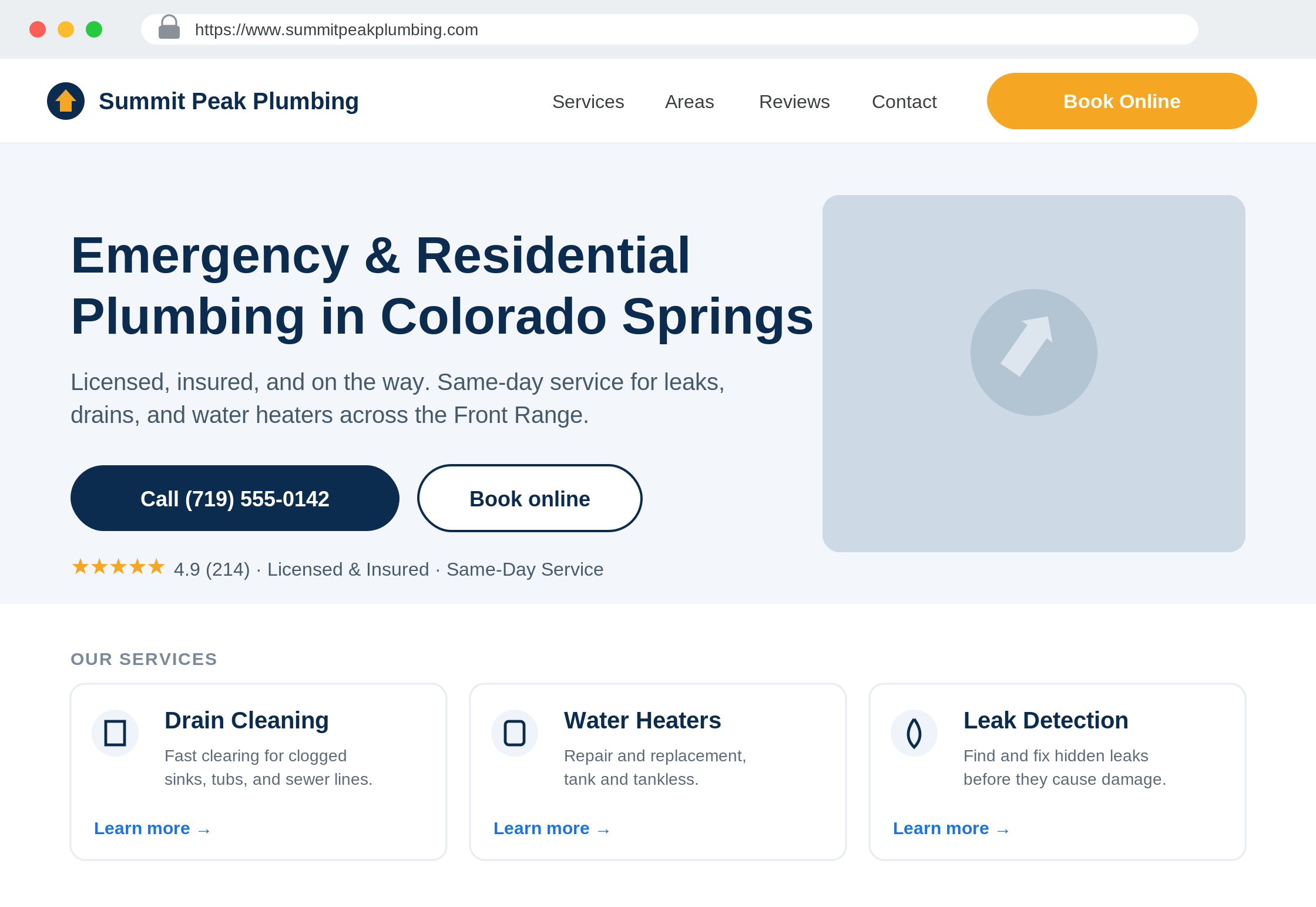
- Say what you do and where. "Roof repair in Denver" is better than "We do roofing."
- Make a page for each service instead of cramming everything onto one page.
- Make a page for each location if you serve several towns or neighborhoods.
- Make your website fast and easy to use on a phone. Most local searches happen on phones.
- Make contact simple. Put your phone, email, and address easily findable on every page.
You aren't trying to trick Google. Just be the best answer to the question people are searching for.
3. Listings everywhere else, like Yelp and directories
Besides Google and your own site, your business can get mentioned across the internet on sites like Yelp, Facebook, Apple Maps, industry directories, and your local chamber of commerce. The SEO term for each of these is a "citation."
These matter for three reasons.
First, they have rankings of their own. People use sites like Yelp to search for local businesses. Showing up here means more traffic to your business.
Second, the directories themselves tend to rank on Google. Search "plumbers near me" and you'll likely see a Yelp directory toward the top of the results.
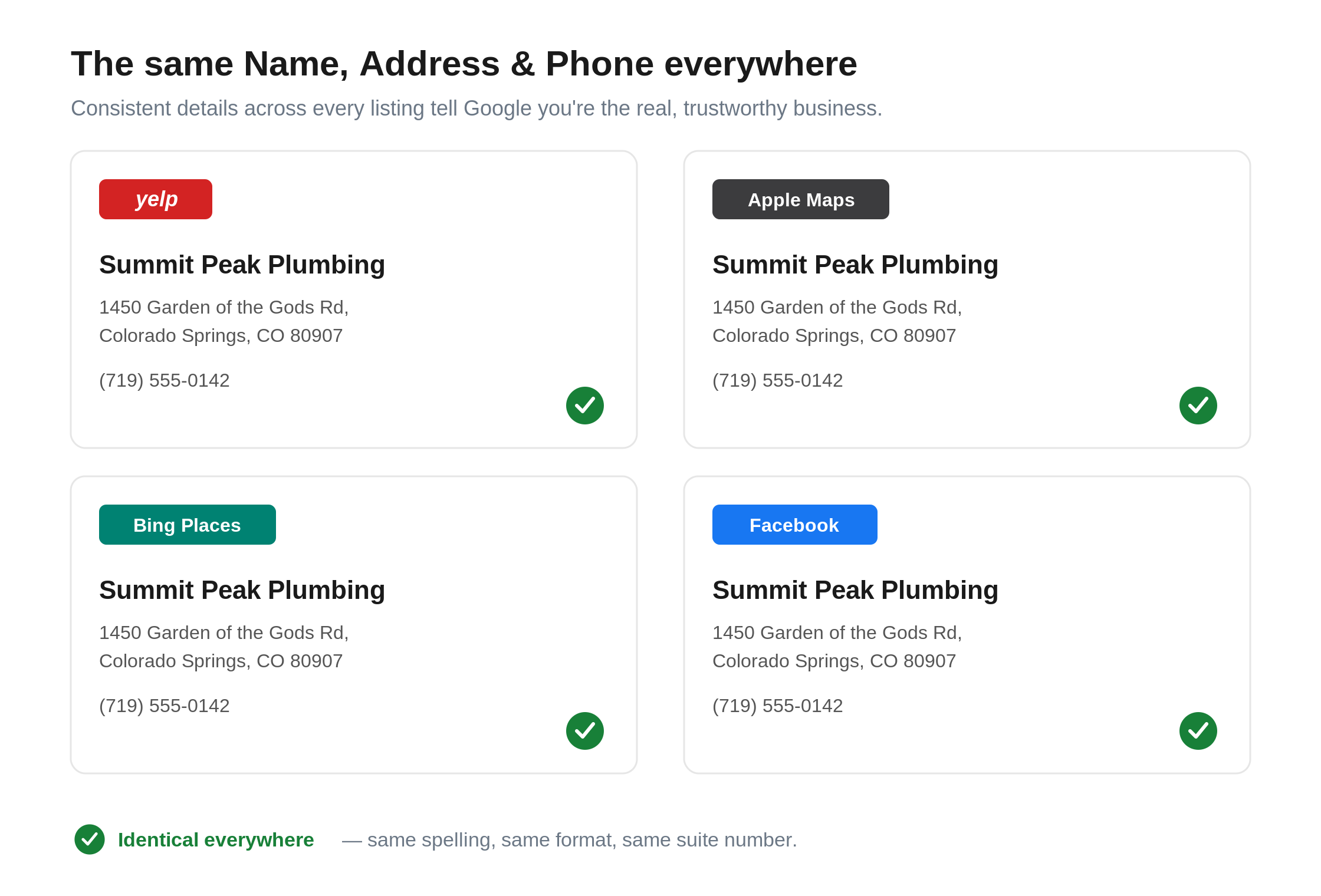
Third, they vouch for your business. When a lot of trustworthy sites all list the same business with the same details, Google is more confident to boost your map rankings.
A simple thing that trips people up is consistency. Your name, address, phone number, etc. need to be identical everywhere. Same spelling, same format. "123 Main St, Suite 200" in one place and "123 Main Street, #200" in another can quietly confuse Google. Pick an exact version and use it everywhere.
What to do:
- Claim your Yelp and Apple Maps listings. Both feed a lot of searches and phone results.
- Get listed on the big general directories like Bing Places and Facebook, plus any industry specific directories.
- Check what's already out there and fix anything that is wrong, inconsistent, or duplicated.
How it all fits together
None of these tactics work on their own. They stack. Your Google Business Profile gets you on the map and collects reviews. Your website wins regular results and makes the profile more credible. Your Yelp and directory listings grab extra spots and reassure Google. Reviews and consistent business info all help tip Google in your favor.
Do all three together and you'll start showing up more consistently when people search for what your business does.
If you only do five things
- Claim and fully fill out your Google Business Profile.
- Get reviews consistently by asking happy customers with a direct link.
- Make your website clearly say what you do and where, with a page for each service and area.
- Claim your Yelp, Apple Maps, Bing, and Facebook listings.
- Keep your name, address, and phone number identical everywhere.
That is local SEO. It's less about secret tricks and more about being clear, consistent, and useful everywhere that Google looks.
The honest catch is that it is simple to understand, but tedious to do well. Claiming listings, chasing reviews, building pages, and making sure everything is consistent month after month is real ongoing work.
Mainsplash can do all of this for you.
Get a free 1-page marketing plan to see how we can help your business grow.